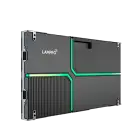
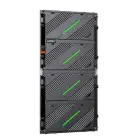
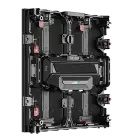
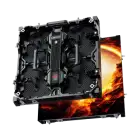
In every SMD LED component of your led screen commercial display, there's a microscopic wire that dictates its performance, reliability, and lifespan. This process, wire bonding, creates the essential electrical connection between the tiny LED chip and its package, allowing it to light up.
The material used for this wire is a critical engineering choice. While copper wire bonding is a common alternative used to lower costs, gold wire bonding remains the non-negotiable standard for high-end, mission-critical displays where failure is not an option.
This guide explains the core benefits of gold wire and why it is the superior investment for any premium LED packaging.
The choice to use gold is a strategic decision that pays off in three primary categories.
While pure copper has a slight conductivity edge on day one, this is misleading. Copper's real-world disadvantage is that it readily oxidizes, and copper oxide is a poor conductor. This oxidation increases electrical resistance, generates heat, and can degrade performance over time. Gold does not oxidize.
It provides a pristine, stable, low-resistance connection for the entire life of the display, ensuring consistent brightness and electrical efficiency.
Effective heat dissipation is key to preventing color shifts and ensuring a long LED life. A manufacturer willing to invest in premium gold wire is also likely to use superior copper lamp brackets (the heat sink), which have better thermal conductivity than the cheap iron brackets often paired with copper wire.
This "quality ecosystem" approach means gold-wired LEDs typically offer far better heat dissipation, leading to more stable colors at high brightness.
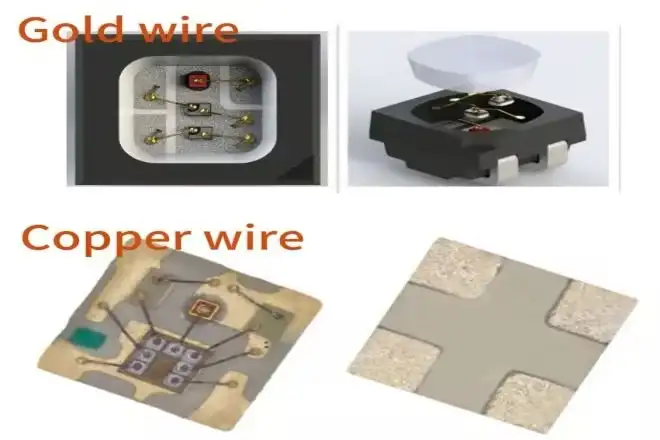
This is gold's most significant advantage. It is a noble metal, meaning it is chemically inert and does not react with oxygen or moisture. Copper, in contrast, is highly susceptible to oxidation, especially in humid or polluted outdoor environments.
This oxidation is the primary cause of premature pixel failure. Gold's inertness makes it the only reliable choice for durable displays in any demanding setting.
Copper is roughly twice as hard as gold. The automated bonding process requires high force and ultrasonic energy to create a weld. With hard copper wire, this aggressive process can transfer significant stress to the fragile LED chip, causing hidden micro-cracks or "cratering".
These "ticking time bomb" defects can lead to bond failure months or years later. Gold's softness and malleability allow for a strong, reliable bond with minimal force, preserving the chip's integrity.
The initial savings from copper wire bonding are often erased by higher long-term costs. These include more frequent maintenance calls, revenue lost from downtime, and a reduced operational lifespan that forces a premature replacement of the entire display.
The upfront investment in gold wire is an "insurance premium" that delivers a longer life, minimal maintenance, and a much lower total cost of ownership.
Gold wire bonding is a mature, refined technology that has been perfected over decades. This results in a stable manufacturing process with a wide processing window, meaning high yields, excellent consistency, and a very low risk of defects.
Copper bonding is a more challenging process with a narrow window, and it requires a special protective "forming gas" to prevent oxidation during the bonding process itself, adding complexity and variability.
This table summarizes the critical differences in the copper vs gold debate.
A technical comparison for professional studio reliability.
| Feature | Gold (Au) Wire | Copper (Cu) Wire |
|---|---|---|
| Cost | High | Low |
| Oxidation Resistance | Excellent (Chemically Inert) | Poor (Readily Oxidizes) |
| Reliability & Weld | High (Protects Chip) | Lower (Risk of Micro-cracks) |
| Hardness (Vickers) | ~25 (Soft, Malleable) | ~50 (Hard, Stiff) |
| Visual Uniformity | Excellent (Stable) | Fair (Prone to Oxidation) |
| Primary Application | High-end Displays | Budget Applications |
Maximize your hardware lifespan with Gold-Wire technology.
Choose Gold-Wire Reliability →
While gold and copper are the main contenders, you may also encounter:
1. Alloy Wire
These are often silver (Ag) or copper (Cu) wires coated with another material, like palladium or gold. They aim to provide a balance between the cost of copper and the reliability of gold.
Silver offers excellent electrical and thermal conductivity, sometimes even better than gold, and is much cheaper. However, pure silver can suffer from "electromigration" and corrosion (sulfurization) in certain environments, which can impact long-term reliability.
Aluminum is commonly used for wire bonding in high-power semiconductor devices but is less common for SMD LED packaging. It's typically applied using a different "wedge bonding" method and is chosen for its own unique properties, though it is not a direct competitor to gold in high-fidelity visual displays.
While some manufacturers may claim to use gold wire, it's crucial to know how to verify it.
Under a high-powered microscope, gold wire has a distinct, rich yellow color and a soft, smooth appearance at the bond point. Copper wire is reddish-brown, while alloy or aluminum wires are typically silver-white.
The definitive approach involves destructive tests on a sample of LEDs. A Wire Pull Test measures the force required to break the bond, while a Shear Test measures the weld's strength at the chip's surface. Advanced methods like Energy-Dispersive X-ray Spectroscopy (EDS) can confirm the material's exact chemical composition and 99.99% purity.
However, the easiest and most reliable method is to partner with a transparent and reputable manufacturer. A trusted supplier will provide clear documentation and test reports verifying the materials used in their components.
At LAMPRO, we build our premium displays, like the LST Series for demanding outdoor environments, with gold wire bonding to ensure they meet their 100,000-hour operational lifespan claims. We believe in prioritizing long-term value and uncompromised performance.
Are you looking for a high-reliability LED display built to last? Contact our team to discuss how our commitment to quality engineering can protect your investment.